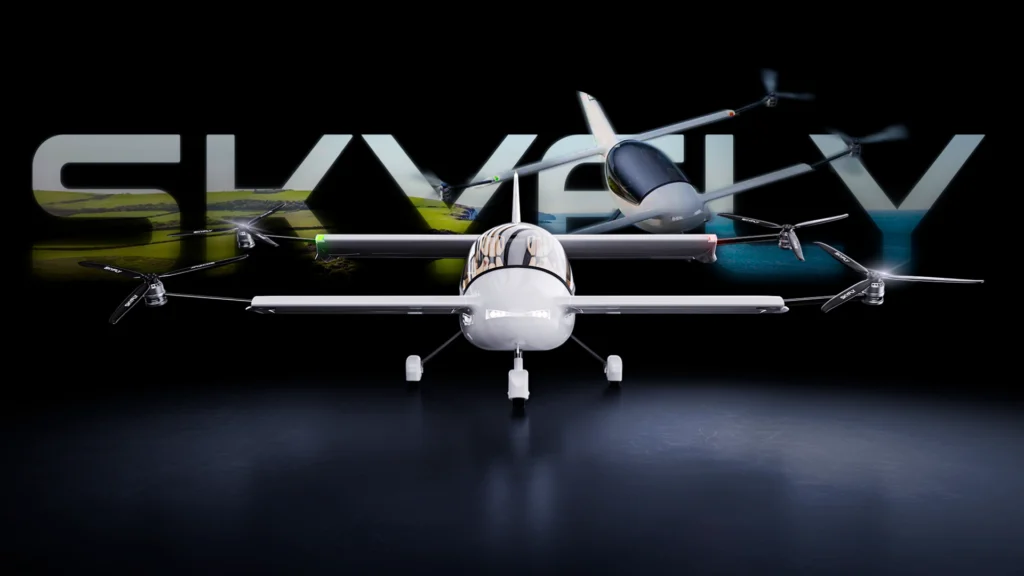
The CAA has approved Skyfly’s Axe VCA, a manned aircraft powered by Veronte Autopilot, to perform flight transitions.

In engineering, verification is a necessary step before launching a new product into the market. The verification process is made up of a set of tests and analyzes that ensure that the developed solution meets the specifications and the customers needs.
At Embention, these tests are carried out by our Verification department, where a series of tests are defined with a pass / fail criteria for each system that make up the autopilot. Among these tests we find specific tests for High Altitude Long Endurance (HALE) flights.
Our autopilots are designed to fly at a high altitude and for a long period of time. For that reason, the Verification team has developed a series of tests in order to assure the right autopilot performance in MALE and HALE flights.
On the one hand, in order to verify that navigation works at a high altitude, we test the aircraft by taking it to altitudes above 10.000m, inside the stratosphere. This test calculates the atmosphere when the aircraft reaches high altitudes and compares the result with the ISA (International Standard Atmosphere, equivalent to the U.S. Standard Atmosphere 1976 version, where a maximum altitude of 47.000m was reached.
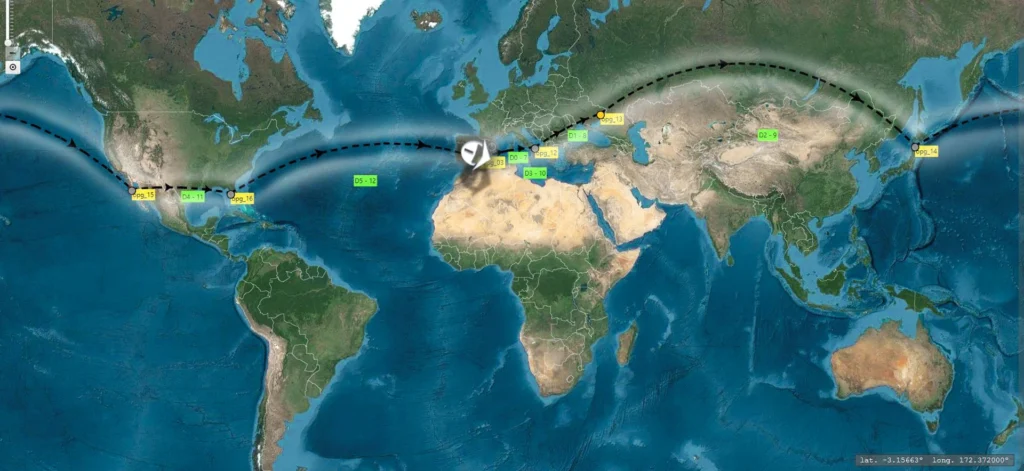
On the other hand, there are tests that simulate long-distance and long endurance flights. For example, a flight around the world in which the Veronte Autopilot simulates the flight for an entire week, verifying a correct operation throughout the simulation. Veronte has an internal telemetry register that saves the variables of interest. Its circular design allows the memory to overwrite itself from the beginning in the case that it runs out at any time, avoiding the loss of the most recent flight data. Furthermore, our autopilots have an internal memory which contains a terrain mesh of the whole world, so no matter the distance of the flight, we will always have information about the ground altitude.
Unmanned aerial vehicles (UAVs), stratospheric platforms, and high-altitude balloons are examples of aircraft that can fly at high altitudes. The Veronte Autopilot provides the precision and cutting-edge technology needed to meet the particular demands of high altitude operations.
The Veronte Autopilot is made especially to withstand the demands of flying at high altitudes. One of its standout features is its pressure sensor range, which spans from 1,000 to 120,000 Pa that can be combined with external sensors in case a wider range is needed. This broad range allows it to accurately measure and respond to the varying atmospheric pressures encountered from sea level up to the stratosphere, ensuring stable and reliable control of the aircraft. This feature is essential for preserving the proper trajectory and altitude in the thin air at high altitudes, where conventional sensors may fail.
In addition, Embention is member of the HAPS Alliance, a non-profit association dedicated to building a high altitude platform stations (HAPS) ecosystem that brings digital connectivity to everyone, everywhere.
In conclusion, our Verification Department is constantly testing in order to offer the highest quality to our customers and prevent them from having any issues when using our products.
Receive news & updates
The CAA has approved Skyfly’s Axe VCA, a manned aircraft powered by Veronte Autopilot, to perform flight transitions.
Embention has obtained ISO 27001 certification, reinforcing its commitment to privacy and information security standards.
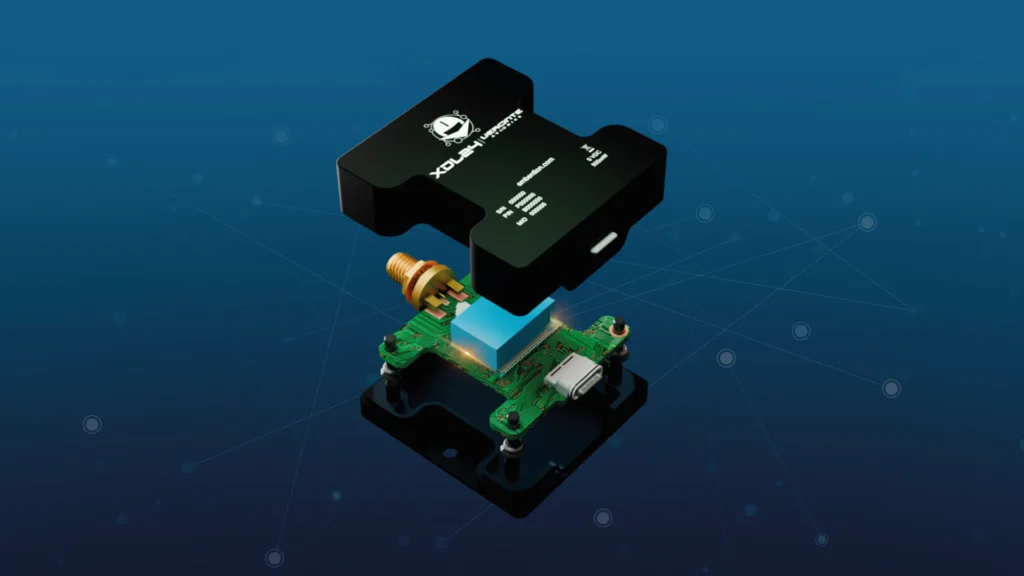
Embention has released the XDL24 Datalink based on XBee 3, the first miniaturized Digi module with IP68 waterproofing, setting a new standard for datalink durability and performance. What is the XDL24? XDL24 is a robust datalink based on XBee 3, a state-of-the-art digital communication module. XDL24 provides secure data transmission with a robust enclosure. It […]